ZKsync's proposal to revamp its ZK token from a governance tool to one with "real economic utility" is generating buzz. The promise? That network usage and enterprise licensing will directly feed value back into the token's economy. It's a bold move, especially given the token's current state: down 83% from its June 2024 all-time high. Is this a last-ditch effort to inject life into a struggling asset, or a genuinely innovative approach to tokenomics?
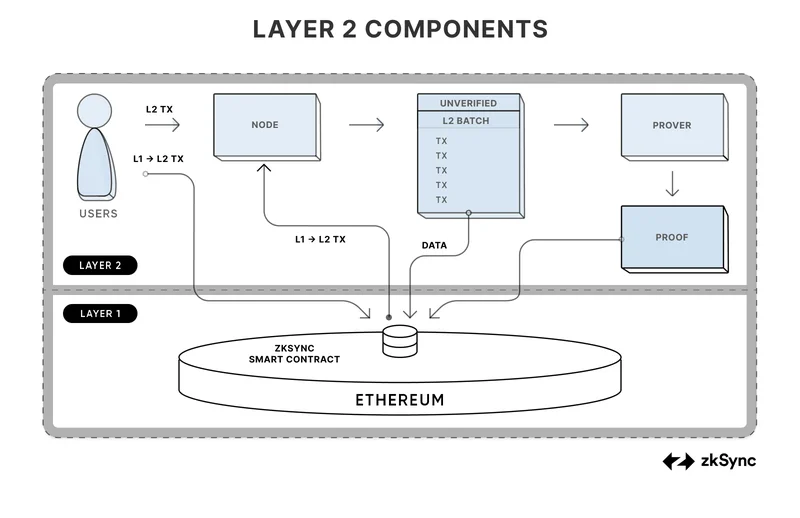
The core of the proposal rests on two revenue streams: on-chain interoperability fees and off-chain enterprise licensing. Interoperability fees, charged when users move assets between rollups, make intuitive sense. As the ZKsync ecosystem grows, increased cross-chain activity should, theoretically, drive revenue. But the devil's in the details. What percentage of each transaction will be siphoned off as a fee? And will this fee be competitive enough to attract users, or will it simply push them towards cheaper alternatives?
The second revenue stream, off-chain licensing of enterprise tools (compliance, reporting modules), is far less concrete. It hinges on institutions building on the protocol and needing these specialized tools. This is a bet on future adoption, and a potentially risky one. We're talking about potential revenue from a potential market.
Olas unveiling Pearl v1, an "AI agent app store," and Edge & Node launching ampersend, a management platform for AI agent transactions, highlight a broader trend: the rise of the "agentic economy." These developments could indirectly benefit ZKsync, attracting more users and, consequently, more interoperability fees. But it's a layered dependency. ZKsync's success isn't solely reliant on its own merits, but also on the growth of adjacent ecosystems.
The proposal outlines a buyback and burn mechanism, funded by these revenue streams. The idea is simple: ZKsync uses revenue to buy ZK tokens off the market and then destroy them, reducing supply and, theoretically, increasing price. But here's where skepticism is warranted. A buyback and burn program is only effective if the underlying demand for the token exists. If no one wants to hold ZK, a reduced supply won't magically create demand. It's like trying to inflate a punctured tire; you can pump all you want, but the air will just leak out.
The market's initial reaction was positive, with ZK jumping over 14% on the day of the announcement. But, as the article from The Defiant notes, the token was up 62% on the week, “indicating that forward knowledge of the proposal may have been frontrun.” Which raises a question: was this genuine market enthusiasm, or strategic buying by insiders ahead of the public announcement? I've looked at enough of these charts to know that such a price movement ahead of an announcement is rarely organic.
And this is the part of the report that I find genuinely puzzling. If the proposal is so revolutionary, why did ZKsync need a helping hand in the form of potential frontrunning? A truly groundbreaking idea should generate its own momentum.
Vitalik Buterin's endorsement of ZKsync, praising its "underrated and valuable" contributions to the Ethereum ecosystem, undoubtedly added fuel to the fire. ZK token jumps 50% after Vitalik Buterin backs ZKsync post But such endorsements carry a double-edged sword. While Buterin's support lends credibility, it also raises expectations. If ZKsync fails to deliver on its promises, the disappointment will be amplified, potentially leading to an even steeper price decline.
Ethereum developers also inked the Fusaka upgrade for December 3rd. Fusaka's headline feature, PeerDAS, reduces bandwidth requirements and costs for validators and Layer-2 networks. The impact should be faster and cheaper transactions for users and developers. But will this upgrade actually translate to a tangible increase in ZKsync's usage and revenue? Or will it simply benefit the entire Ethereum ecosystem, diluting ZKsync's competitive advantage? Details on the projected cost savings and speed improvements for ZKsync specifically remain scarce.
The ZK token currently changes hands at roughly 5 cents per token, or a $380 million market capitalization. This is a far cry from the valuations seen during the peak of the crypto bull market. The question isn't whether ZKsync can implement this new tokenomics model, but whether it should. Is this a genuine attempt to create sustainable value, or simply a form of financial engineering designed to temporarily pump the price of the token? The answer, as always, lies in the data – data that, at this point, is largely speculative.
ZKsync's tokenomics proposal feels less like a long-term strategy and more like a high-stakes gamble to regain market confidence. I remain unconvinced that buybacks and endorsements can substitute for genuine user adoption and sustainable revenue generation. Show me the on-chain metrics, not the press releases.