
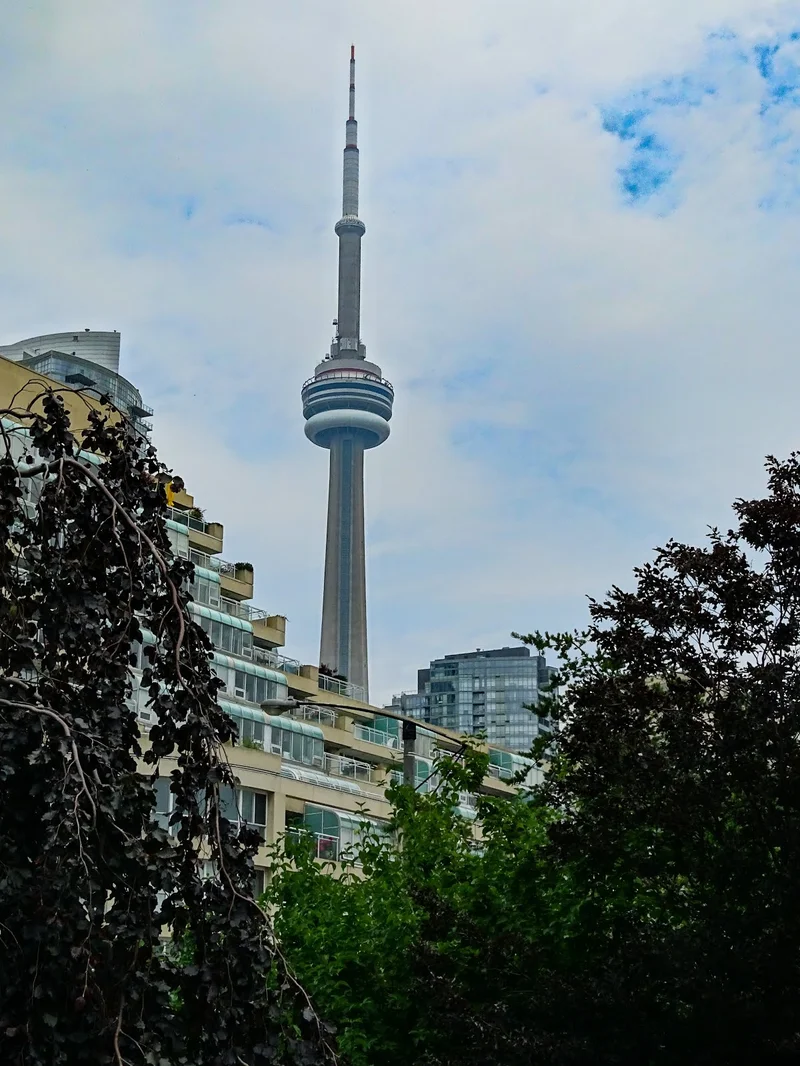
Tonight, the CN Tower will slice through the Toronto skyline, a 1,815-foot needle of concrete and steel. On any other night, its hourly light show is a piece of civic background music, a predictable pulse in a major metropolis. It recently CN Tower lights up in blue for World Food Day 2025, a noble and abstract cause. But the shade of blue that matters tonight, the one consuming the city’s collective consciousness, has nothing to do with global initiatives and everything to do with a 32-year-old hunger.
The Toronto Blue Jays are one win away from a World Series championship.
This single fact has transformed the ticket market for Game 6 at the Rogers Centre—a venue sitting quite literally in the shadow of the CN Tower—into a fascinating, if not completely unhinged, economic event. The data points are staggering. The floor for entry isn't a few hundred dollars; it's a four-figure barrier. Across the major secondary markets, the absolute cheapest way to get inside the building is just over $1,000. To be more exact, the consistent floor appears to be between $1,100 and $1,500 for a seat that likely offers a better view of the CN Tower itself than of home plate.
This isn't just supply and demand. This is a case study in the economics of memory. A ticket to this game is no longer a simple good or service. It has become a short-term, high-volatility financial instrument whose underlying asset is the possibility of witnessing history. It's a call option on a city-wide explosion of joy, and the premium is astronomical.
To understand the absurdity of a $100,000+ price tag for a pair of premium seats, we have to look beyond the simple 3-2 series lead. The catalyst for this market frenzy has a name: Trey Yesavage. The rookie pitcher’s performance in Game 5 wasn’t just good; it was a black swan event. Striking out 12 Dodgers in Los Angeles while allowing only one run didn't just win a baseball game. It broke a 76-year-old World Series record and fundamentally altered the probability models in the minds of an entire fan base.
Before that game, a championship was a hope. After Yesavage’s historic outing, it feels to many like an inevitability. That perceived shift from possibility to probability is what’s driving this market. The demand isn't just from lifelong fans; it's from anyone susceptible to FOMO (Fear Of Missing Out), a powerful market force that defies rational pricing.
I've looked at hundreds of market events driven by sentiment, and this particular surge is a classic. The data from the ticketing platforms acts as a real-time sentiment gauge. The velocity of sales and the upward pressure on pricing following the Game 5 win likely resembled the trading flurry after a surprise earnings beat. The product isn't a seat; it's a claim on a future emotional state. What is the precise dollar value of being able to say, "I was there"? The market’s current answer ranges from one thousand to one hundred thousand dollars.
This is where my analysis hits a wall with the available data. Those six-figure listings—are they legitimate? Or are they merely aspirational asks from sellers, designed to anchor the entire market at an artificially high level? Without transaction data, it’s impossible to know if anyone is actually paying that price, or if it's the equivalent of a "meme stock" valuation, completely detached from any tangible value. Who is the buyer of a $100,000 ticket? Is it a corporation using it as the ultimate client schmoozing tool? Or is it a private equity partner who sees it as a rounding error?
The juxtaposition is what I find most compelling. A few weeks ago, the CN Tower glowed blue to raise awareness for a systemic global issue. It was a broadcast to the world, a symbol of shared responsibility. The light was serene, steady, and predictable—an 8-minute show, every hour on the hour.
Tonight, the city is consumed by a different blue. This one is frantic, hyperlocal, and intensely personal. The economic activity it has generated is chaotic and exclusionary. The price of entry to the Rogers Centre creates a clear dividing line. For a thousand dollars, you can be in the building. For anything less, you can stand outside and watch the colors change on the tower. The view from the CN Tower observation deck offers a panoramic, almost clinical perspective of the city. From that height, the stadium is just a shape, and the frenzy is invisible, inaudible.
This is the perfect metaphor for the market itself. From a distance, the numbers are just abstract data points on a screen—outliers in a supply-and-demand curve. But on the ground, they represent a thousand different stories of frantic calculation and emotional justification. Is a month’s mortgage payment worth a memory that will last a lifetime? Does the potential for a historic celebration (a celebration that hasn’t occurred since 1993) justify liquidating a portion of your portfolio?
These aren't questions that can be answered on a spreadsheet. The market is trying to price an intangible, and in the process, it's revealing the massive, almost comical, discrepancy between what something costs and what it's truly worth to a human being.
Let's be clear: the numbers being reported are a function of scarcity and desperation, not rational valuation. The $1,100 ticket and the $100,000 ticket are not pricing access to a baseball game; they are pricing the chance to be present at a coronation. The market has become a brutal, inefficient mechanism for allocating joy. My analysis suggests that the vast majority of these high-end listings will never transact. They exist to warp the perception of value for the tickets that actually will. The real story isn't the outlier price; it's the baseline—the fact that thousands of ordinary people are seriously weighing a four-figure cost for a few hours of hope. The true asset here—the collective memory of a city—is something that no ticket price can ever truly capture. It remains, as ever, unquantifiable.